
 classicnews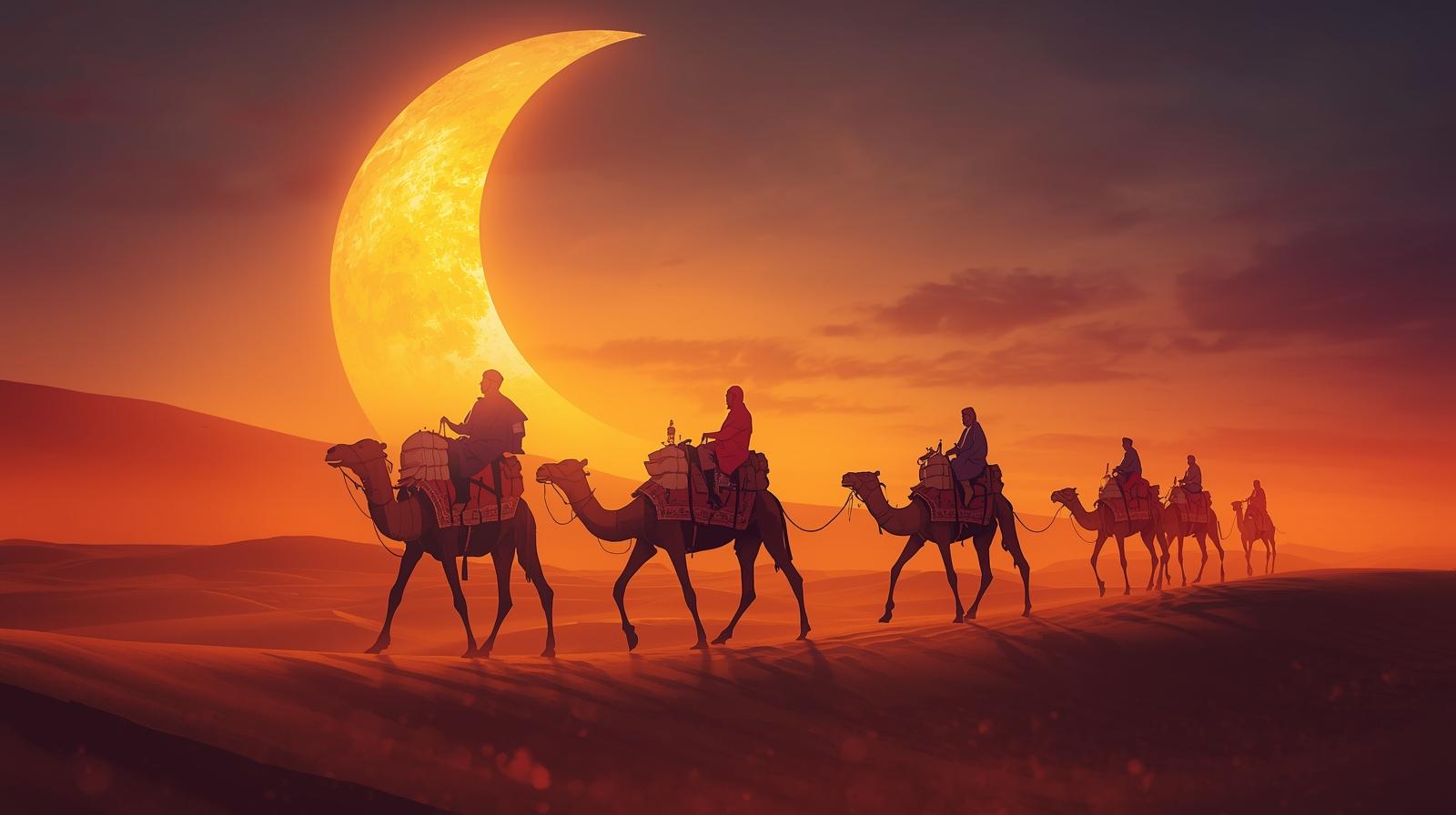
Meta Description (SEO):
Discover how trade routes, merchant networks, and ethical business practices played a key role in the spread of Islam across continents, from Arabia to Africa and Asia.
Keywords/Tags:
Islamic trade, spread of Islam, Muslim merchants, Islamic expansion, Silk Road, Indian Ocean trade, Islamic civilization, trade and da’wah, Islamic history, Muslim traders
The Role of Trade in Islamic Expansion
Throughout history, trade has not only been a means of economic prosperity but also a bridge for cultural, social, and religious exchange. In the early centuries of Islam, trade played a vital role in spreading the message of Islam far beyond the Arabian Peninsula—reaching Africa, Asia, and Europe. Muslim merchants, known for their honesty and integrity, became powerful agents of both commerce and da’wah (inviting others to Islam).
- Trade as a Vehicle for Peaceful Expansion
Unlike conquests or political campaigns, trade allowed Islam to expand peacefully. Muslim traders traveled along major routes such as the Silk Road, Trans-Saharan routes, and the Indian Ocean trade network. They interacted with diverse cultures and peoples, introducing Islamic values through their business ethics and personal conduct.
Regions such as Southeast Asia, West Africa, and East Africa embraced Islam largely due to trade relations rather than military conquest. Cities like Malacca, Timbuktu, and Zanzibar became thriving centers of Islamic culture and learning.
- Ethical Conduct and Islamic Business Principles
The Prophet Muhammad ﷺ himself was a merchant before prophethood, known for his honesty and fair dealings. His example inspired Muslim traders to conduct business with justice and transparency.
The Qur’an emphasizes:
“Give full measure and weight in justice and do not deprive people of their due.” (Surah Al-A‘raf, 7:85)
This ethical foundation attracted non-Muslims who admired the fairness, truthfulness, and compassion of Muslim traders. Business relationships often evolved into spiritual connections, leading many to embrace Islam.
- Key Trade Centers in the Islamic World
As Islam spread, trade hubs flourished under Muslim rule. Cities such as Baghdad, Cairo, Damascus, and Cordoba became global centers of commerce, learning, and culture. Muslim traders also connected the Mediterranean with the Indian Ocean, linking Europe, Africa, and Asia in one vast commercial network.
This interconnected economy strengthened Islamic civilization and encouraged the exchange of ideas, technologies, and scientific knowledge.
- Trade and Cultural Exchange
Trade not only spread goods like spices, textiles, and gold but also facilitated the exchange of language, science, architecture, and religion. The Arabic language became a unifying medium of communication and scholarship across Muslim lands.
In regions like Indonesia, Malaysia, and West Africa, local rulers adopted Islam after witnessing the moral strength and organization of Muslim merchants. These rulers then encouraged their people to follow suit, embedding Islam deeply in their societies.
- The Lasting Impact of Trade on the Islamic World
The legacy of Islamic trade is still visible today in coastal cities and marketplaces that once connected continents. The spread of Islam through trade exemplifies how faith can expand through peaceful, ethical, and mutually beneficial interactions.
Muslim traders demonstrated that commerce could serve not just worldly gain but also spiritual purpose — spreading the message of Islam through integrity, justice, and respect for humanity.
Conclusion
Trade was more than an economic activity in Islamic history; it was a means of da’wah and civilization-building. The success of Muslim merchants in spreading Islam across continents stands as a timeless reminder that honesty, fairness, and good character are the most powerful tools in inviting others to truth.


