
 classicnews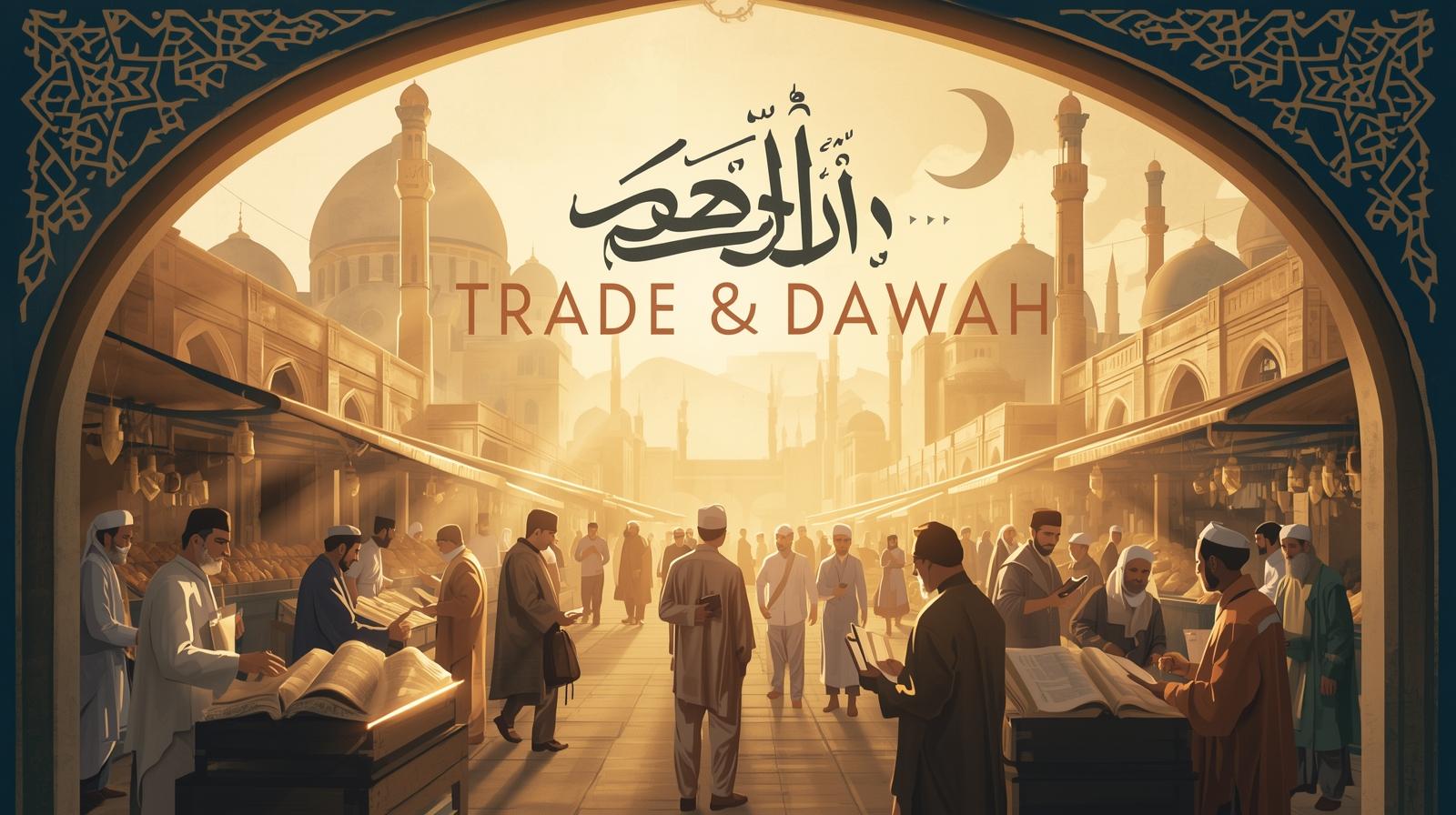
Trade and commerce have played a pivotal role in the spread of Islam since its inception. The Prophet Muhammad ﷺ, his companions, and the early Muslim communities used trade not only as a means of economic sustenance but also as a powerful channel for dawah (inviting others to Islam). Understanding this connection between trade and dawah reveals lessons that are still relevant for Muslims today.
Trade in the Time of the Prophet ﷺ
The Prophet ﷺ himself was involved in trade before prophethood, working as a trustworthy merchant under Khadijah (RA). His impeccable honesty, integrity, and fairness in business dealings earned him the title “Al-Amin” (the Trustworthy), long before he was chosen as a Prophet. This reputation created a positive impression on the people he interacted with, making them more receptive to his message of Islam.
His example shows that ethical trade can serve as a living demonstration of Islamic principles, making dawah a natural extension of one’s business interactions.
Companions Who Spread Islam Through Trade
Several companions of the Prophet ﷺ leveraged trade as a tool for dawah:
- Abu Bakr (RA): Used trade journeys to build trust and share the message of Islam subtly.
- Uthman ibn Affan (RA): His mercantile activities and honesty in business expanded Islam’s influence to regions like Syria.
- Sulaiman al-Taymi and others: Conducted trade expeditions that not only earned profits but also introduced Islamic values in new lands.
Through these examples, we see that trade was not just about profit—it was about building relationships, fostering trust, and exemplifying Islamic ethics.
Trade as a Medium for Dawah
Trade facilitates interaction with diverse cultures and societies. By maintaining integrity, fairness, and compassion in business, Muslims can:
- Show Islamic Values in Action: Ethics in trade—like honesty, avoiding fraud, and fair pricing—reflect the teachings of Islam.
- Build Trust and Reputation: A trustworthy trader naturally gains influence and can use that respect to share Islamic teachings.
- Create Opportunities for Dialogue: Business networks allow for conversations about faith in a non-confrontational, respectful manner.
- Support the Muslim Community: Profitable trade can also finance charitable projects, mosques, and educational initiatives, reinforcing the Islamic mission.
Modern Implications
Today, Muslim entrepreneurs can continue this legacy by integrating Islamic principles into their businesses:
- Avoiding interest (riba) in transactions.
- Upholding transparency and fairness.
- Treating employees and clients with justice and kindness.
- Using business success to support community welfare and dawah projects.
In doing so, trade becomes more than a source of wealth—it becomes a vehicle for positive influence and a reflection of Islamic values in the wider world.
Conclusion
The role of trade in dawah demonstrates that spreading Islam is not limited to preaching or formal teaching. Every ethical transaction, every honest deal, and every compassionate business interaction can become an opportunity to invite others toward Islam. The legacy of the Prophet ﷺ and his companions reminds us that trade, when aligned with faith, is both a worldly and spiritual pursuit.


